

Metro vs Rural Locums in Australia: A Guide with Real-World Insights from Dr Saunders
Locum work can give doctors and nurses greater flexibility, exposure to different healthcare environments and the opportunity to build a career around the experiences that matter to them.
However, not every locum placement looks the same.
A metro locum role may involve joining a large hospital with established systems, specialist departments and a high volume of patients. A rural or remote placement may involve working within a smaller team, managing a broader range of presentations and adapting to the needs of the local community.
Neither option is necessarily better. The right choice depends on your experience, clinical interests, confidence, personal circumstances and what you want to gain from your next placement.
In this guide, we compare rural and metro locums for doctors and nurses, with practical insights from
Dr Saunders, a UK-trained doctor who has worked across Royal Darwin Hospital, Alice Springs, Kangaroo Island, and Aboriginal Medical Service (AMS) clinics in Katherine and the Northern Territory's remote communities.
Catch the conversation with Dr Saunders here:
Rural vs metro locums: the key difference
Rural locums generally offer broader clinical exposure, smaller teams, closer community connections and opportunities to develop generalist skills. Metro locums often provide more structured departments, immediate access to specialist teams, larger clinical workforces and the convenience of remaining close to city services.
In practice, the distinction is not always clear-cut. A large regional hospital may operate similarly to a metro facility, while a small metropolitan service may require considerable autonomy.
The most important consideration is not simply whether a location is rural or metro. It is whether the individual role, facility, support structure and scope of practice are suitable for you.
What is considered a rural or metro locum placement?
Australian locations are commonly classified using the Modified Monash Model.
The model broadly ranges from:
- MM1: Metropolitan areas
- MM2: Regional centres
- MM3 to MM5: Large, medium and small rural towns
- MM6: Remote communities
- MM7: Very remote communities
This means that the term “rural locum” can describe several very different working environments.
While the allure of the bush is strong, many clinicians prefer the stability and excitement of the city. Metro locums allow you to balance a high-level medical career with the cultural perks of living in places like Sydney, Melbourne, or Brisbane.
A locum placement in a large regional hospital may include specialist departments, diagnostic facilities and established referral pathways. A remote clinic or Aboriginal Medical Service may be several hours from the nearest hospital and require clinicians to work with fewer resources physically available on site. When comparing the financial outcomes of rural vs metro locums, the numbers often lean toward the rural side. Generally, the higher the MMM number (indicating more remote), the higher the pay rate and the better the incentives.
Before accepting a placement, look beyond the general location category. Ask about the facility, patient presentations, team structure, escalation pathways and the level of support available.
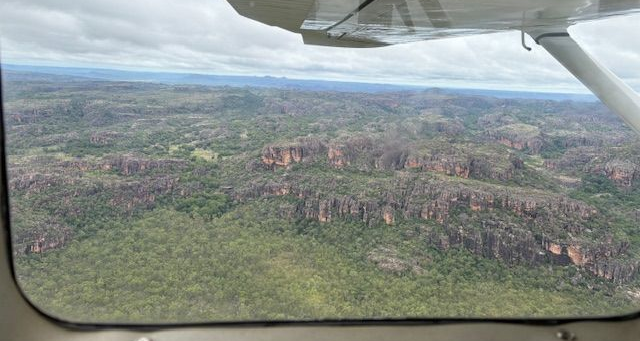
Photo shared by Dr Saunders en route to her remote NT placement
Rural vs metro locums at a glance
| Feature | Metro locums | Rural and remote locums |
|---|---|---|
| Appointment structure | Booked, fixed time slots, process-driven | Flexible and responsive, walk-ins common |
| Case mix | Concentrated within a specialty | Broad mix of acute and chronic presentations |
| Clinical support | Specialists and services physically on site | Smaller on-site team backed by DMO phone support, telehealth and retrieval services |
| Team dynamic | Larger department | Tight-knit, close working relationships |
| Community connection | Patients often from a broad geographic area | Genuine opportunity to understand and contribute to a local community |
| Professional development | Specialist exposure within high-volume services | Generalist experience, autonomy and broader clinical decision-making |
| Lifestyle | City services, transport and entertainment | Shorter commutes, outdoor activities and community connections |
These are general differences rather than fixed rules. Every placement should be assessed individually.
How they compare day to day
Appointment structure and pace
In metro placements, your day tends to run on booked appointments and fixed time slots, with a fairly predictable structure from start to finish.
In rural and remote placements, the rhythm is far more flexible and patient-led, with walk-ins a regular part of the day, and a single booked slot can easily turn into a richer consult when a parent brings a child along who also needs to be seen.
Consultations don't always happen behind a desk either. In community settings, it's common to see patients outside, sitting on a bench or in the shade, wherever they're most comfortable, which often makes for a more relaxed, natural conversation than a standard consult room allows.
"It's very opportunistic, and I do love it. You might get two people that come into an appointment together and then they also bring their child, and the child has a problem as well, so you end up seeing three people in what you'd imagine is a one-person consult."
- Dr Saunders
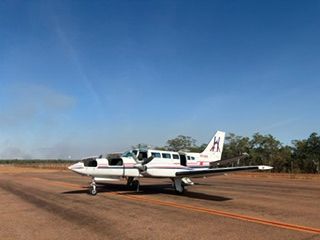
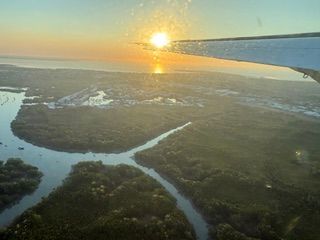
Photo shared by Dr Saunders en route to her remote NT placement
Case mix and scope of practice
Metro placements are generally more specialised, with cases aligning closely to your area of practice and easy access to a wide range of specialists and diagnostics on site.
Rural and remote work brings a broader, more varied mix into a single day, especially in AMS clinics, where chronic disease management sits alongside genuine acute presentations. Doctors often say this variety sharpens their all-round clinical skills faster than a narrower metro caseload would.
This breadth is one of the reasons doctors often describe rural placements as accelerating their clinical development. You're regularly trusted to manage presentations that might otherwise go straight to a specialist, which builds confidence and range.
"You’re seeing all this chronic disease, but you’re also really far away from a tertiary hospital, seeing anything else that is happening on the day, like a sick baby or someone who’s crashed their car, or trying to fly someone out with a stroke."
- Dr Saunders
Building rapport with patients
Metro consultations are typically shorter, with less time built in for context beyond the immediate clinical issue.
In Rural and remote placements, rapport-building looks quite different, and it's central to how the job actually functions. It starts before you even arrive, because understanding a community's history, language groups, and culture gives you a genuine foundation to build trust from the first conversation, and many doctors find this one of the most meaningful parts of the job.
Local diet and lifestyle matter too. In the Top End, that might mean understanding the role of fish and turtle in the diet. In Central Desert communities, it's more likely to be kangaroo, buffalo and boar. This context directly shapes conversations around nutrition and chronic disease management, and it signals genuine interest in a patient's life beyond the consult.
"Read about the community before you go, as soon as you know which community you're going to go to, because everywhere is so different. Read about the art centre, the language groups, and the history, because that gives you a foundation to build rapport with your patients."
- Dr Saunders
Public health impact
Metro: Public health issues tend to be broader and less immediately visible in day-to-day consultations.
Rural and remote: Health priorities are much more localised, from managing an outbreak to closing long-term gaps in chronic disease outcomes, which means a locum's contribution is often felt directly and quickly within the community.
This visibility is part of what draws many doctors to rural work repeatedly. The impact of good care is tangible in a way that can be harder to see in a larger system.
"Being mindful of the public health issues affecting these communities is so important, particularly knowing what the public health emergencies are at the time."
- Dr Saunders
Support systems and connection
Metro: Specialists, allied health, and senior colleagues are typically on site, giving you a large team to draw on day to day.
Rural and remote: Placements work with a smaller, tighter-knit team instead, backed by strong phone and telehealth networks. District Medical Officers, most of whom have rural and remote experience themselves, are available around the clock, and many AMS clinics now have cameras set up over resuscitation areas so specialists can guide a clinician through a serious emergency in real time.
Colleagues also tend to form closer working relationships in remote settings, simply because the team is smaller. Many doctors describe this as one of the most rewarding parts of rural work, a genuine sense of camaraderie that's harder to find in a large metro department.
"I generally have found that everyone I've spoken to whenever I've needed help has always been very friendly."
- Dr Saunders
Mindset, adaptability and lifestyle
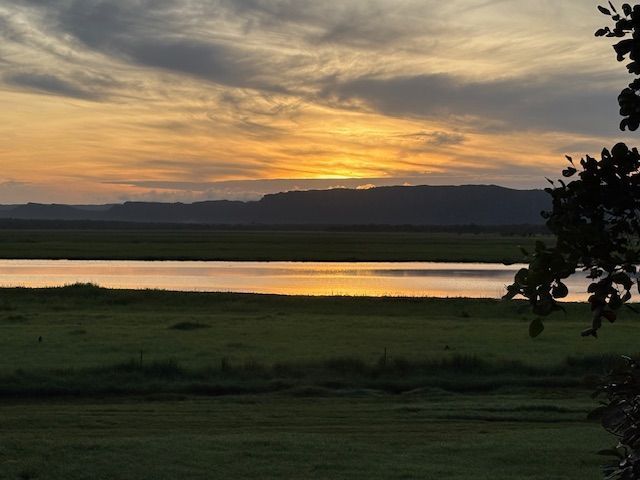
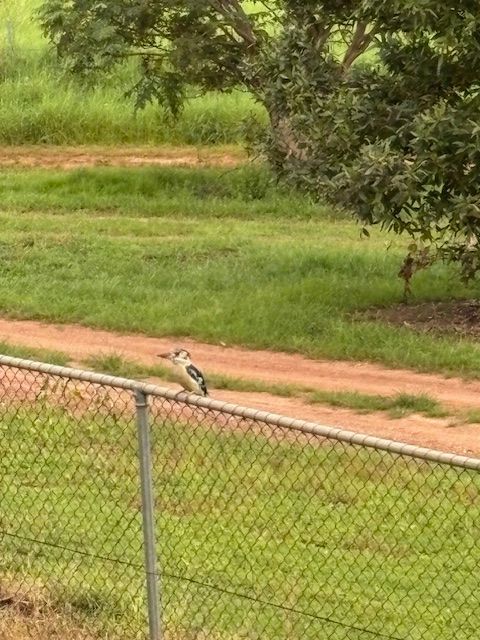
Photos shared by Dr Saunders during her remote NT placement: Views from her balcony
In metro placements, structured systems and processes are generally the norm, and doctors are trained to work within them. Metro work is often less about "adventure" and more about "optimisation." It’s about finding a way to make your career fit into your life rather than the other way around. If you are looking to pick up extra shifts to save for a mortgage or simply want to try out a new hospital environment before committing to a permanent contract, metro locuming is a strategic move.
For many, the decision to stay metro is driven by family commitments. If your partner has a corporate job or your children are settled in school, a metro locum role offers the flexibility to work shifts without the need for long-distance travel or weeks away from home. You can work at different facilities, seeing how different departments run, without ever leaving your postcode.
Rural and remote placements ask for something different, because they reward flexibility and being led by the patient and community in front of you. It's a different rhythm to learn, and most doctors who embrace it say it makes them better, more well-rounded clinicians.
"It can be challenging in the beginning because we are taught a certain way of medicine. Once you let go of that control and learn to practice in a different style, it can be a very rewarding job, and a very interesting job."
- Dr Saunders
Support before you even start: The Jon & Jon Difference
Clinical support in the field is one thing, but the logistics behind a placement matter just as much, especially for rural and remote roles where there's less room to sort things out once you land. Dr Saunders spoke at length about what that's looked like working with the Jon & Jon Medical team, and it came down to two things: the arrangements being handled properly behind the scenes, and actually being listened to.
On the arrangements side, she pointed to Kirsty's role in making sure everything was sorted before she even arrived.
"I've been very impressed by all of them, especially Kirsty, who has just been flawless in her arrangements. I just turn up at the place and everything is just in place. They know who I am, they know where I'm going, they know where I'm staying. She's really organised everything very well from behind the scenes."
On the placement side, she credited Marcus with matching her to roles that actually suited her, rather than just filling a vacancy.
"The same goes for Marcus. I’ve really been very impressed by all the organisation, advocating for me to have the jobs I want and listening to what I need."
That listening piece mattered to her in particular. Rather than having to re-explain her preferences with every new placement, she found they were understood and respected from the very first conversation. Even the smaller details were looked after. Dr Saunders' cat August travels with her to every placement, including on small charter flights, and has settled in well wherever she's gone, something she said made a genuine difference to how comfortable she felt moving from placement to placement.
"I really set out at the beginning and said, ‘These are the things that I want; these are the things that I don’t want.’ And that was it. They just kind of stuck to the script that I'd given, which was great.. They've definitely kept August very happy. He's enjoyed the placements very much, which is the most important thing. If he's happy, I'm happy. "
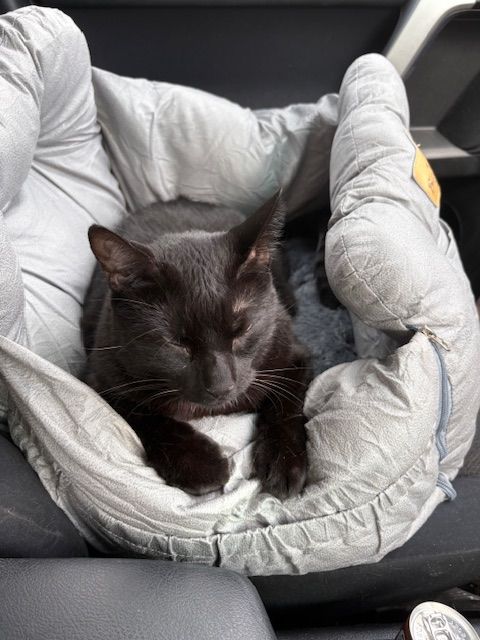
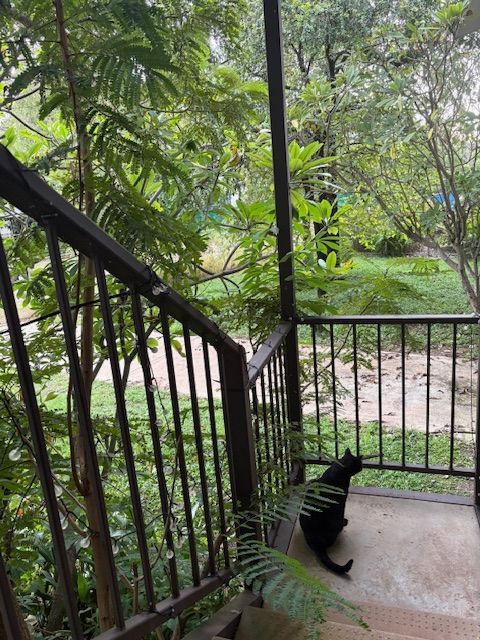
Photos shared by Dr Saunders: Her cat August accompanies her on remote placements
Who tends to thrive in rural and remote placements
Rural and remote work tends to suit doctors and nurses who:
- Enjoy social medicine and getting to know a patient's story, not just their presenting complaint
- Like a flexible, patient-led day rather than a fixed schedule
- Want broader clinical exposure across chronic and acute presentations
- Are curious about a new community's culture and history
- Value close-knit teams and a strong sense of camaraderie on site
If you are a Rural Generalist, the opportunities are particularly abundant. These roles often combine GP clinic work with emergency on-call shifts, providing a hybrid career model that is financially lucrative and professionally stimulating.
However, it’s not just about the work. Rural life offers a pace that the city can’t match. Imagine finishing a shift and being ten minutes away from a national park, a quiet beach, or a local pub where everyone knows your name. For those feeling the onset of burnout in the high-pressure metro systems, a three-month stint in a regional town can be a complete career reset. At Jon & Jon Medical, we pride ourselves on matching the right personality to the right town, ensuring that your rural adventure feels like a home away from home.
"If you enjoy social medicine, if you enjoy knowing your patient's story, knowing them as a person, then it's absolutely the job for you. You learn so much about the social determinants of health, what matters to people, how they perceive medicine. ... You get to know people's stories and their understanding of medicine and their own health, which is very interesting, and has definitely helped me understand my role as a doctor and where I fit in as a health professional."
- Dr Saunders
Getting Started
If you're weighing up rural or remote locum tenens work in Australia for the first time, a bit of preparation goes a long way. Look into the community's background, understand what's happening locally, and go in with curiosity and an open mind.
Ask yourself these 3 questions:
- What is my primary goal? If it’s saving money or gaining broad clinical autonomy, go rural. If it’s staying close to family or networking in a specific specialty, stay metro.
- What is my risk tolerance? Rural work requires a high degree of self-reliance. If the idea of being the lead clinician in an emergency excites you, the bush is waiting. If you prefer a team-based environment with immediate backup, the city is better.
- What does my life look like outside of work? Do you want a surfboard and a quiet beach, or a latte and a gallery opening?
At Jon & Jon, we don't just find you a job; we help you design a lifestyle. Whether you’re ready to pack your boots for the Northern Territory or want to find the perfect shift in downtown Melbourne, we have the network to make it happen. Our team understands the nuances of the Australian medical market because we’ve been part of it for more than a decade.
Key Takeaways for Your Locum Journey:
- Rural locums offer higher pay, professional autonomy, and a unique chance to experience the 'real' Australia.
- Metro locums provide lifestyle stability, networking, and access to high-tech medical environments.
- Growth: Both paths offer growth, but rural roles build generalist confidence while metro roles refine specialist expertise.
Ready to explore your options? Register with us today to discuss our current vacancies, or visit our Referral Programme to see how you can benefit from connecting your colleagues with their next great adventure.
FAQs
Is rural locum work harder than metro locum work?
It's different rather than harder. Rural and remote placements involve a broader case mix and a more flexible structure, while metro roles tend to be more specialised with a fixed appointment structure. Many doctors find the variety and connection of rural work more rewarding, though which suits you best depends on your working style and clinical interests.
What support is available to doctors working in remote locations?
Remote clinicians are backed by District Medical Officers available by phone, and increasingly by telehealth setups that let specialists guide care in real time during emergencies. Teams tend to be smaller and closer-knit, which many doctors describe as a real positive of remote work.
How should I prepare for a rural or remote AMS placement?
Research the community's history, language groups, and current public health priorities before arriving. Understanding local diet and culture also helps build rapport with patients and supports more relevant clinical advice, particularly around nutrition and chronic disease.
Have any more questions?