


The hierarchy of medical doctors in Australia
ORIGINALLY PUBLISHED: 9 SEPT 2024 LAST UPDATED: 15 JULY 2026 TEAM JON & JON MEDICAL
The Structure of Medical Careers in Australia: From Medical Student to Consultant
Whether you're a medical student planning your future, an international medical graduate (IMG) preparing to work in Australia, or simply curious about how hospitals are structured, understanding the medical hierarchy can feel overwhelming.
Terms like Intern, Resident Medical Officer (RMO), Registrar, Fellow, Consultant, Staff Specialist and General Practitioner (GP) are often used interchangeably, even though they represent very different stages of training and responsibility. To make things even more confusing, some titles vary between Australian states and health services. An RMO in New South Wales may be called an HMO in Victoria, while Queensland commonly uses Principal House Officer (PHO) for certain positions.
Although it's often referred to as the "doctor hierarchy", these titles aren't about one doctor being more important than another. Instead, they reflect a doctor's level of training, experience and clinical responsibility. Every doctor plays an essential role in delivering safe, high-quality patient care.
Whether you're considering a career in medicine, preparing for specialty training or exploring locum opportunities, understanding how the Australian medical career pathway works can help you make more informed decisions.
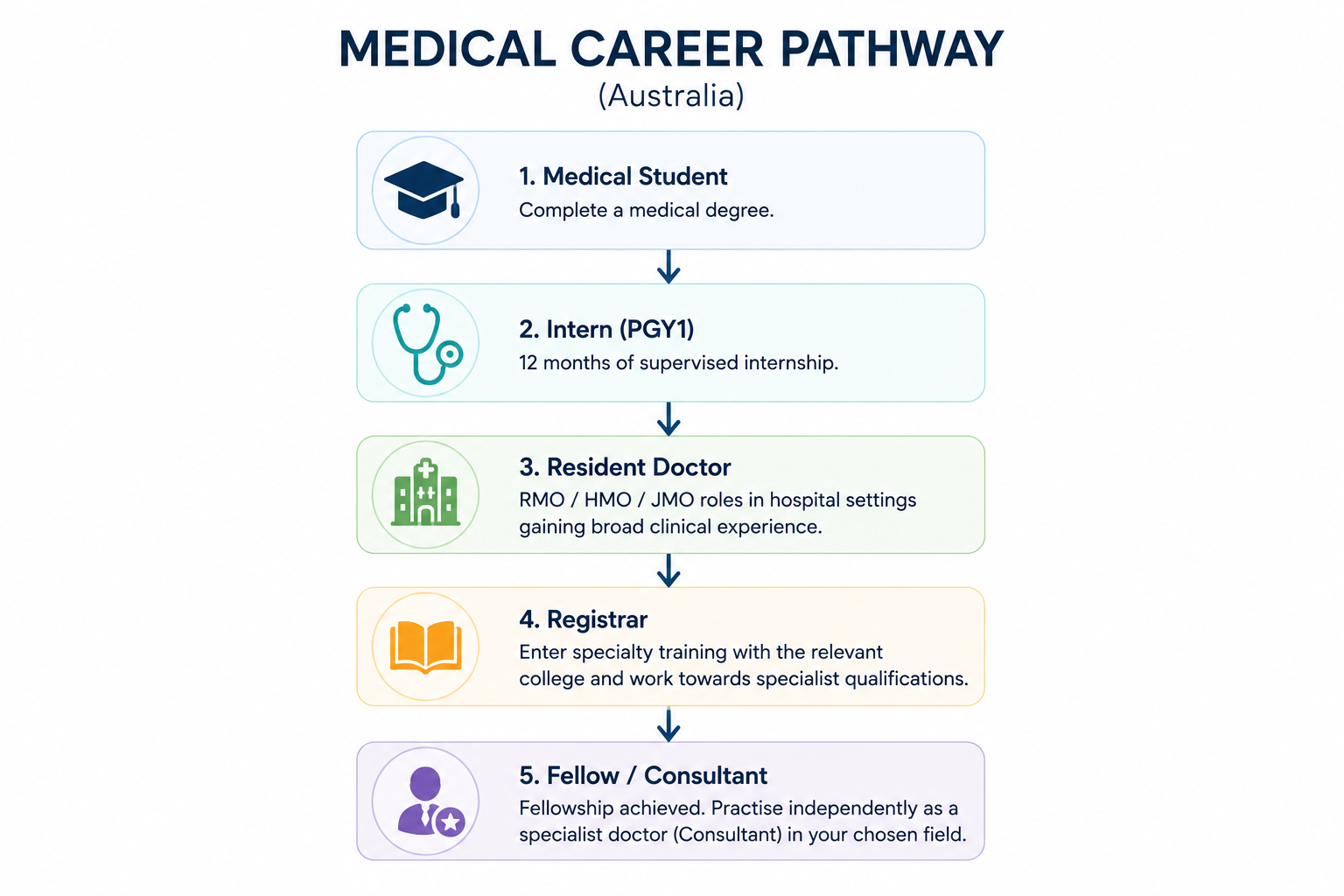
Most doctors follow a career pathway similar to this:

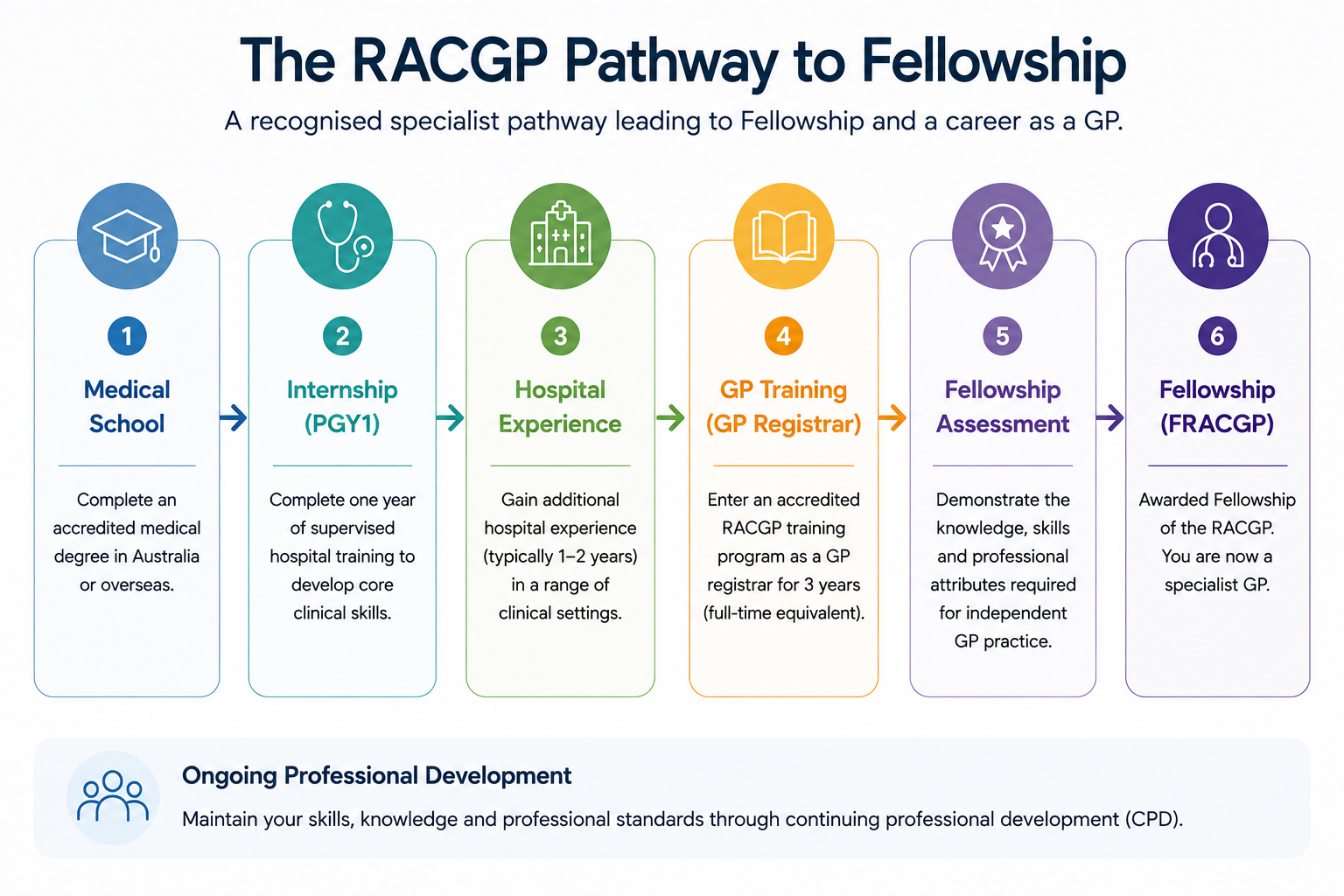
General Practice follows a slightly different pathway:

Figure: Simplified pathway based on information from the
Royal Australian College of General Practitioners (RACGP).
Training pathways vary between specialties, colleges and individual career choices, but this provides a good overview of how most doctors progress through the Australian healthcare system.
Medical Student
Every doctor's journey begins at medical school.
In Australia, medical students complete either an undergraduate medical degree or a postgraduate Doctor of Medicine (MD), depending on the university. Medical school generally takes between four and six years. The early years are focused on building a strong understanding of anatomy, physiology, pathology, pharmacology and clinical science. As students progress, they spend increasing amounts of time in hospitals, general practices and community health settings, learning directly from experienced clinicians.
Although medical students work closely with patients during clinical placements, they are not yet registered medical practitioners. Instead, they observe, learn and gradually develop the skills needed for clinical practice under close supervision.
These years lay the foundation for everything that follows.
What life looks like
Medical school is demanding, but it's also where many future doctors discover what excites them most about medicine.
Some students find themselves drawn to the fast pace of Emergency Medicine. Others enjoy building long-term patient relationships in General Practice or are inspired by the procedural nature of Surgery, Anaesthetics or Obstetrics and Gynaecology.
It's also the stage where many students begin thinking beyond graduation and considering what kind of career they ultimately want to build.
Intern (PGY1)
Graduating from medical school is a huge milestone, but it's only the beginning of a doctor's clinical career. The first year after graduation is known as Internship, or Postgraduate Year 1 (PGY1).
During this year, newly graduated doctors work under provisional registration while completing an accredited internship. Successful completion is generally required before doctors become eligible for general registration with the Medical Board of Australia. This ensures new graduates have developed the core clinical skills needed for independent medical practice.
Interns usually rotate through several departments, including:
- General Medicine
- Surgery
- Emergency Medicine
- Other approved clinical terms
Each rotation provides exposure to different patient groups, medical conditions and hospital environments.
Interns assess patients, order investigations, prescribe medications within their scope, complete discharge summaries, communicate with patients and families, and work closely with nurses, allied health professionals and senior doctors.
What life looks like
For many doctors, internship is where medicine truly becomes real. It's the first time you're responsible for patients, making clinical decisions and applying everything you've learned at university. There are first ward rounds, first night shifts, first emergency calls and countless opportunities to learn from more experienced clinicians.
While the workload can be challenging, internship builds the confidence and practical skills that every doctor relies on throughout their career.
Locum opportunities
Most interns focus on completing their supervised training year and achieving general registration.
Although locum opportunities are generally more common after gaining additional postgraduate experience, internship is a great time to start thinking about your future career direction and the types of roles that might interest you once you've gained more experience.
Resident medical officers (RMOs) (PGY2 - PGY4+): where the real work begins
After successfully completing internship, doctors usually move into resident-level positions.
Depending on where you work in Australia, these doctors may be known as:
- Resident Medical Officer (RMO) – commonly used in New South Wales
- Hospital Medical Officer (HMO) – commonly used in Victoria
- Junior Medical Officer (JMO)
- Senior Resident Medical Officer (SRMO)
- Principal House Officer (PHO) – commonly used in Queensland
Although the titles vary, the role is broadly the same.
Residents have completed internship and are continuing to build their clinical experience before entering specialist training.
Many doctors spend anywhere from one to several years as residents, rotating through different specialties while deciding where they'd like to focus their career.
What life looks like
This is often one of the most enjoyable stages of a medical career. Residents gain exposure to different specialties, different consultants and different hospitals while continuing to develop their clinical judgement.
Some discover they love Psychiatry. Others decide Emergency Medicine is the perfect fit. Some realise they prefer General Practice or develop a passion for rural medicine after working in regional hospitals. These years provide the freedom to explore before committing to a specialist training pathway.
Locum opportunities
As doctors become more experienced, locum opportunities begin to open up.
Some Resident Medical Officers choose short-term placements to experience different hospitals, broaden their clinical exposure or work in regional communities before applying for specialist training.
Locum work at this stage can provide valuable experience while helping doctors build confidence across a range of healthcare settings.

Registrars: honing your expertise, expanding your horizons
Registrars are doctors undertaking specialist training or working at registrar level within a particular specialty. By this stage, they have completed internship and usually several years of hospital experience.
Registrars are responsible for much of the day-to-day management of patients. They assess new presentations, develop treatment plans, supervise junior doctors, perform procedures appropriate to their level of training and work closely with consultants to deliver patient care.
Registrars can be found across almost every area of medicine, including:
- Emergency Medicine
- Psychiatry
- General Practice
- Anaesthetics
- Obstetrics and Gynaecology
- Surgery
- General Medicine
- Paediatrics
- Intensive Care
One important distinction in Australia is the difference between accredited and unaccredited registrars.
- An accredited registrar has secured a place on an approved specialist training program through the relevant Australasian medical college. Their training contributes directly towards Fellowship.
- An unaccredited registrar performs many of the same clinical duties but has not yet entered a formal college training program. This is particularly common in competitive specialties where doctors may spend additional time gaining experience before successfully entering specialist training.
What life looks like
Registrar years are often the busiest and most rewarding years of a doctor's career.
You're no longer the junior doctor asking every question, but you're also still learning every day.
Registrars often balance busy clinical workloads with college exams, research, teaching responsibilities and specialist training requirements. They become leaders within their teams while continuing to develop the advanced skills needed for independent specialist practice.
Locum opportunities
Registrars make up a significant proportion of Australia's locum workforce.
Hospitals frequently recruit registrar locums across specialties such as Emergency Medicine, Psychiatry, General Medicine, Anaesthetics and Obstetrics and Gynaecology to help cover workforce shortages, annual leave and increasing patient demand.
For many registrars, locum work provides an opportunity to broaden their clinical experience, work in different health services and enjoy greater flexibility while continuing their professional development.
Consultant / Staff Specialist
The pinnacle of the medical profession in Australia, consultants are highly skilled and experienced doctors who have dedicated years to mastering their chosen speciality. Becoming a consultant represents the culmination of many years of education, training and clinical experience. They have completed specialist training and practise independently within their chosen field. They provide senior clinical leadership, supervise junior doctors and registrars, manage complex cases and guide treatment decisions.
Depending on the hospital or health service, consultants may also be employed under titles such as:
- Staff Specialist
- Visiting Medical Officer (VMO)
- Senior Medical Officer
While the employment arrangements differ, these doctors are recognised as senior specialists within their discipline.
What life looks like
Consultants often balance several responsibilities beyond patient care.
Many are involved in teaching, research, quality improvement, clinical leadership and mentoring the next generation of doctors. Some combine public hospital work with private practice, while others dedicate their careers to regional or rural medicine.
Although consultants carry the greatest clinical responsibility, they continue learning throughout their careers as medicine evolves.
Locum opportunities
Consultant locums play an essential role in Australia's healthcare system.
Hospitals regularly rely on specialist locums to cover annual leave, parental leave, workforce shortages and temporary vacancies, particularly in regional and rural areas where recruitment can be more challenging.
Many consultants choose locum work because it provides greater flexibility, the opportunity to experience different health services and the ability to tailor their workload around their lifestyle. Locum rates for consultants are among the highest in the medical field, especially in high-demand specialities or remote locations. This allows you to boost your income significantly and achieve your financial goals faster.

Jon & Jon Medical: your trusted locum partner
Every week, our consultants speak with doctors at every stage of their careers.
Some are residents exploring specialty training. Others are registrars looking for broader clinical exposure, while many experienced consultants are seeking greater flexibility through locum work.
Because we work exclusively in medical recruitment, we understand that every doctor's career looks different.
For some, the right opportunity is a short-term placement close to home. For others, it's a rural contract, an Aboriginal Medical Service, a coastal hospital or a longer-term role in a new part of Australia.
Wherever you are in your medical career, our role is to understand your goals and connect you with opportunities that support both your professional development and your lifestyle.
What We offer:
Nationwide network: At Jon & Jon, we have a vast network of connections with hospitals and healthcare facilities across Australia. This allows us to offer locums in virtually any location, from major metropolitan areas to remote outback communities.
Top-Tier opportunities: Our strong relationships with clients ensure we have access to the most sought-after and well-compensated locum positions for consultants.
Tailored matching: We take the time to understand your unique skills, experience, and preferences, ensuring we connect you with the ideal locum roles that match your career goals and lifestyle aspirations.
As a doctor, you have the power to choose how and where you practice medicine. Locum work with Jon & Jon provides the flexibility, financial rewards, and professional stimulation you deserve. Whether you're a recent graduate seeking your first locum experience or a seasoned consultant looking for a change of pace, we're here to support you every step of the way.